
This article breaks down the OWASP Top 10 for Agentic Applications 2026 into practical engineering guidance: what each risk means in real systems, how it shows up, and what you can implement today.

🤔Who this guide is for:
- Software engineers building agent workflows (tools, memory, RAG, multi-agent)
- Security engineers threat modeling LLM/agent deployments
- Architects and tech leads defining guardrails, approvals, and observability
⚙️What makes an “agentic application” different?
An agentic application is not just a chatbot. Agents can:
- interpret natural language goals,
- plan multi-step workflows,
- call tools (APIs, DBs, email/calendar, code runners),
- store and retrieve memory/context,
- communicate with other agents,
- and operate with varying levels of autonomy.
OWASP emphasizes a key point: agents amplify existing vulnerabilities, and security becomes non-negotiable when autonomy + tools + memory combine.
OWASP presents a “system view” that helps map risks to components like inputs, integration/processing, and outputs.
The Agentic Top 10 at a glance

For each Item in OWASP Top 10 for Agentic Applications, we'll use following structure, so it's easier for us to understand, or you can (and you should) read the full report at https://genai.owasp.org/resource/owasp-top-10-for-agentic-applications-for-2026/
- What it is + Where it appears
- Impact + How it gets exploited
- Mitigations + SDLC Checklist
🕑OWASP Top 10 for Agentic Applications (2026) — Developer Quick Guide
ASI01 — Agent Goal Hijack
1️⃣ What It Is + Where It Appears
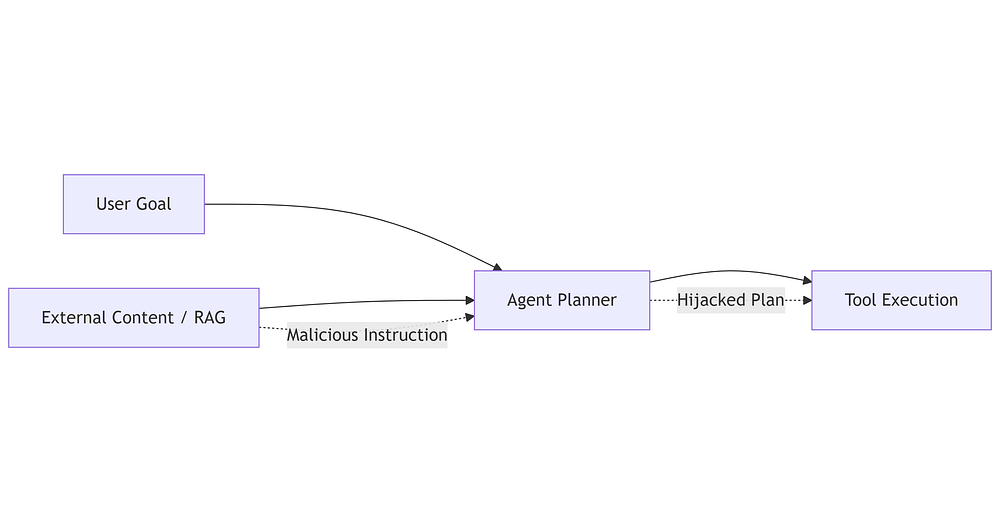
Agent Goal Hijack happens when an attacker manipulates an agent’s planning or objective by injecting malicious instructions through prompts, RAG data, uploaded documents, emails, or tool outputs. It commonly appears in RAG-enabled assistants, automation agents, support bots, and multi-step planners where natural language directly influences decisions.
2️⃣ Impact + How It Gets Exploited
Impact: Unintended actions, data exfiltration, financial misuse, workflow corruption.
Exploitation Examples:
- Malicious instructions hidden in RAG content override agent goals.
- Email instructs agent to upload confidential data.
- Tool response embeds hidden follow-up instructions
3️⃣ Mitigations + SDLC Checklist
Mitigations
- Intent validation before tool execution
- Treat all external text as untrusted
- Require confirmation for high-risk actions
- Enforce least privilege tool scopes
SDLC Checklist
- Add plan-vs-goal validation layer
- Log reasoning before tool calls
- Red-team RAG sources
- Add approval gate for sensitive actions
ASI02 — Tool Misuse & Exploitation
1️⃣ What It Is + Where It Appears
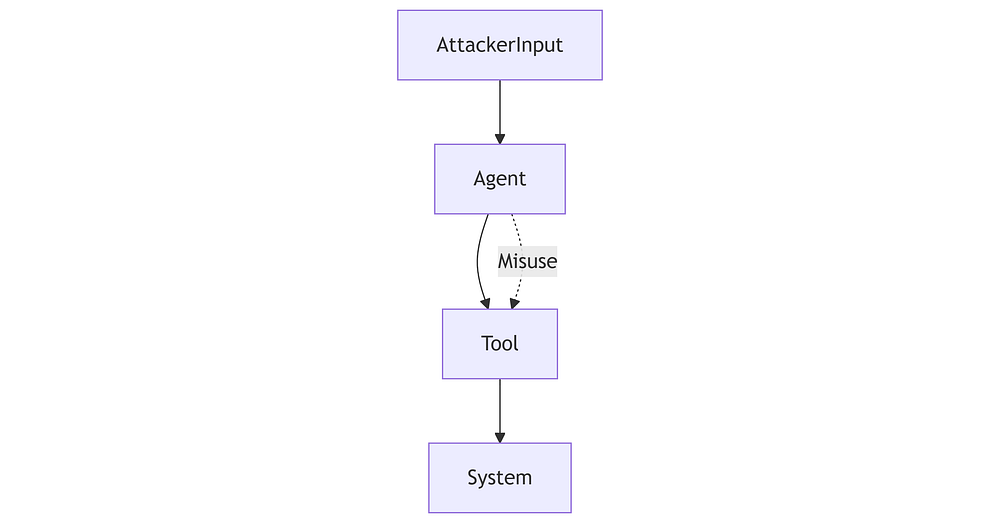
Agents misuse tools when excessive permissions, ambiguous instructions, or unsafe tool interfaces allow unintended or dangerous actions. Common in API-integrated agents, automation bots, email/calendar assistants, and DevOps agents.
2️⃣ Impact + How It Gets Exploited
Impact: Data deletion, system misconfiguration, cost explosions, external exfiltration.
Exploitation Examples:
- Over-privileged email tool deletes inbox.
- Unvalidated input forwarded to SQL/shell tool.
- Infinite API loops cause DoS or billing spikes.
3️⃣Mitigations + SDLC Checklist
Mitigations
- Least privilege per tool
- Schema validation before tool call
- Rate limits and budget caps
- Sandboxed execution
SDLC Checklist
- Define explicit tool contracts
- Add execution guardrails
- Monitor tool usage anomalies
- Add cost controls
ASI03 — Identity & Privilege Abuse
1️⃣ What It Is + Where It Appears
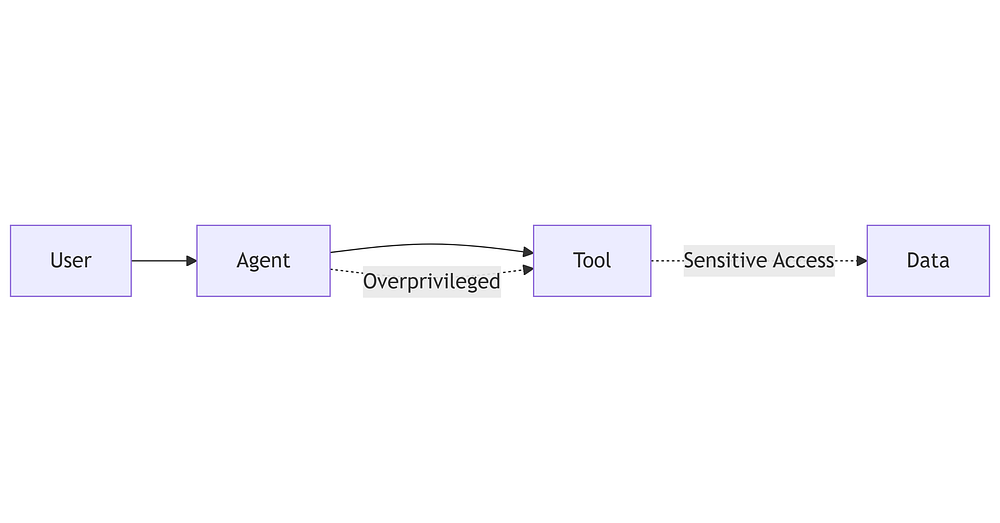
Occurs when agents inherit, misuse, or retain privileges improperly across sessions, users, or delegated workflows. Seen in enterprise agents with SSO, multi-role systems, and delegated task chains.
2️⃣ Impact + How It Gets Exploited
Impact: Privilege escalation, cross-user data leaks, compliance violations.
Exploitation Examples:
- Manager delegates task, full admin access persists.
- Memory retains prior user secrets.
- Agent-to-agent confused deputy attack.
3️⃣ Mitigations + SDLC Checklist
Mitigations
- Task-scoped, time-limited tokens
- Memory isolation per session
- Re-verify permissions before sensitive calls
SDLC Checklist
- Implement short-lived credentials
- Separate memory per user
- Enforce RBAC validation per action
- Audit delegation chains
ASI04 — Agentic Supply Chain Vulnerabilities
1️⃣ What It Is + Where It Appears
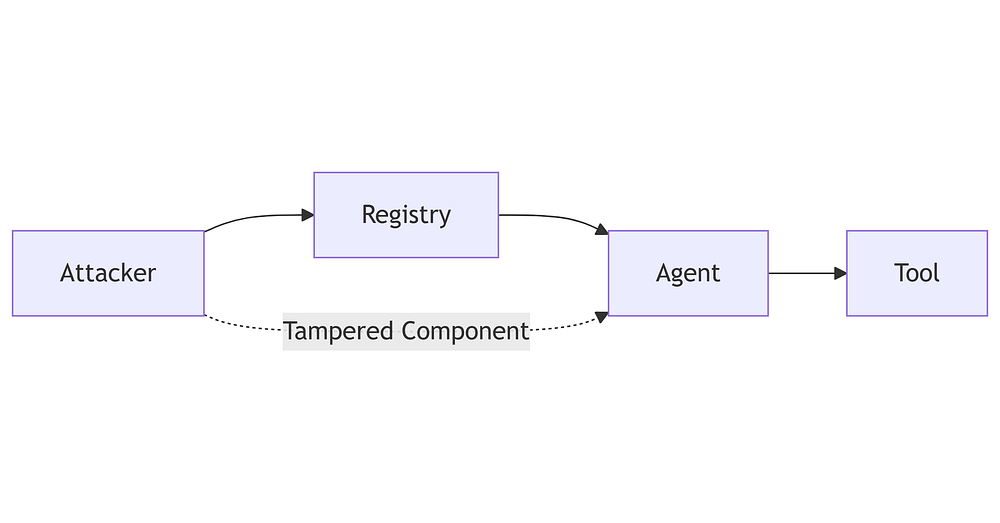
Agents dynamically load prompts, plugins, tools, agent cards, and models. Compromised or impersonated components introduce runtime supply chain risk.
2️⃣ Impact + How It Gets Exploited
Impact: Backdoors, malicious tool execution, data leakage across agents.
Exploitation Examples:
- Typosquatted tool in marketplace.
- Remote prompt template replaced.
- Unsigned agent card injects hidden behavior.
3️⃣ Mitigations + SDLC Checklist
Mitigations
- Signed tool manifests
- SBOM/AIBOM tracking
- Allowlist registries only
SDLC Checklist
- Pin versions
- Verify signatures at runtime
- Monitor registry changes
- Implement kill switch
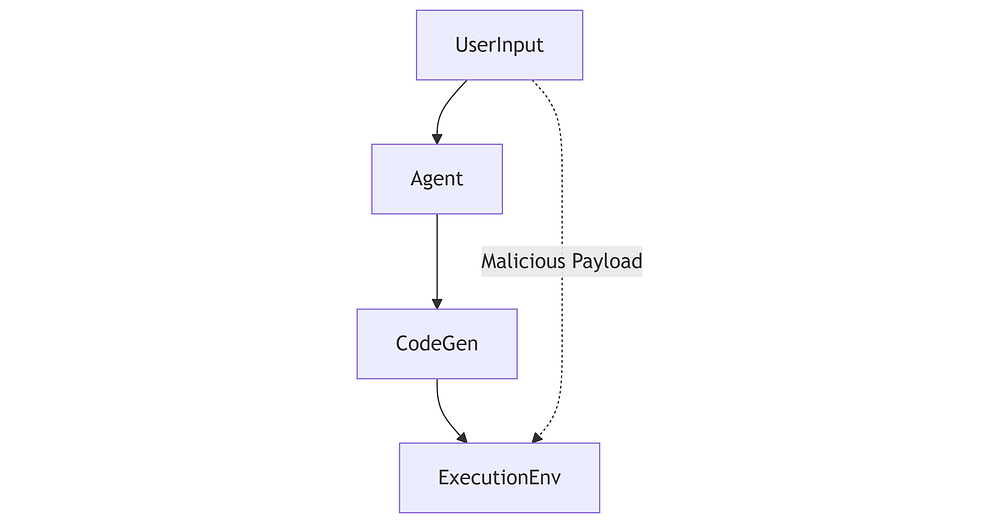
ASI05 — Unexpected Code Execution
1️⃣ What It Is + Where It Appears
Agents that generate or execute code may be manipulated into running malicious instructions. Seen in code-generation agents, DevOps agents, data processors.
2️⃣ Impact + How It Gets Exploited
Impact: Container escape, RCE, data compromise.
Exploitation Examples:
- Prompt injection causes shell command execution.
- Unsafe deserialization.
- Malicious dependency auto-installed.
3️⃣ Mitigations + SDLC Checklist
Mitigations
- Separate generation from execution
- Non-root sandboxed containers
- Manual approval for high-risk code
SDLC Checklist
- Disable direct eval
- Add container isolation
- Scan generated code
- Monitor runtime behavior
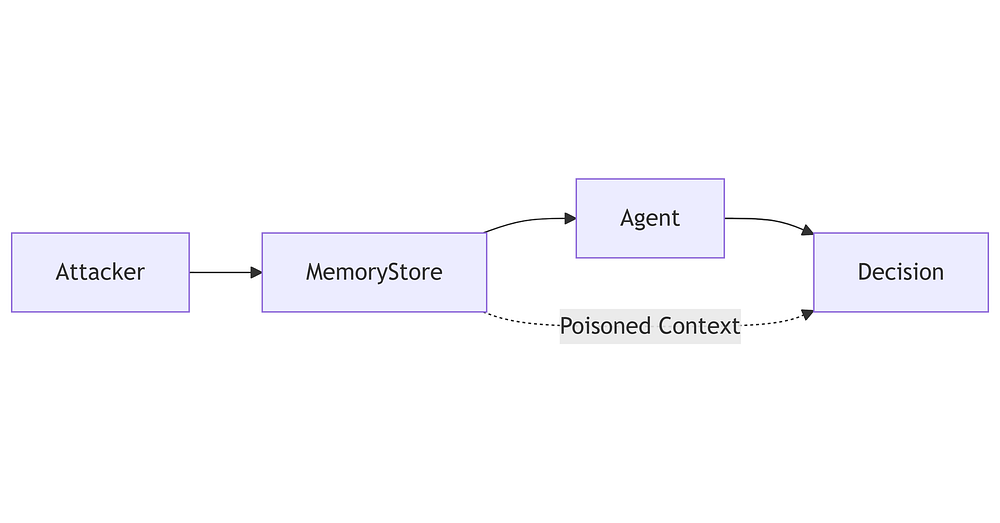
ASI06 — Memory & Context Poisoning
1️⃣ What It Is + Where It Appears
Attackers inject malicious or misleading data into memory systems (RAG, embeddings, summaries) that influence future reasoning.
2️⃣ Impact + How It Gets Exploited
Impact: Persistent manipulation, biased decisions, hidden backdoors.
Exploitation Examples:
- Poisoned knowledge base entry.
- Malicious data summarized into long-term memory.
- Cross-agent shared memory contamination.
3️⃣ Mitigations + SDLC Checklist
Mitigations
- Validate before writing to memory
- Memory segmentation
- Expiration + rollback capability
SDLC Checklist
- Log memory writes
- Add integrity checks
- Separate user contexts
- Enable memory purge
ASI07 — Insecure Inter-Agent Communication
1️⃣ What It Is + Where It Appears
Multiple agents communicating via APIs, buses, or shared memory without strong authentication or integrity validation.
2️⃣ Impact + How It Gets Exploited
Impact: Message spoofing, replay attacks, hidden instruction injection.
Exploitation Examples:
- Forged agent message triggers action.
- Replay of valid transaction.
- Intercepted unencrypted communication.

3️⃣ Mitigations + SDLC Checklist
Mitigations
- Mutual TLS
- Message signing
- Anti-replay protection
SDLC Checklist
- Enforce mTLS
- Validate message schema
- Implement nonce + timestamp
- Log agent interactions
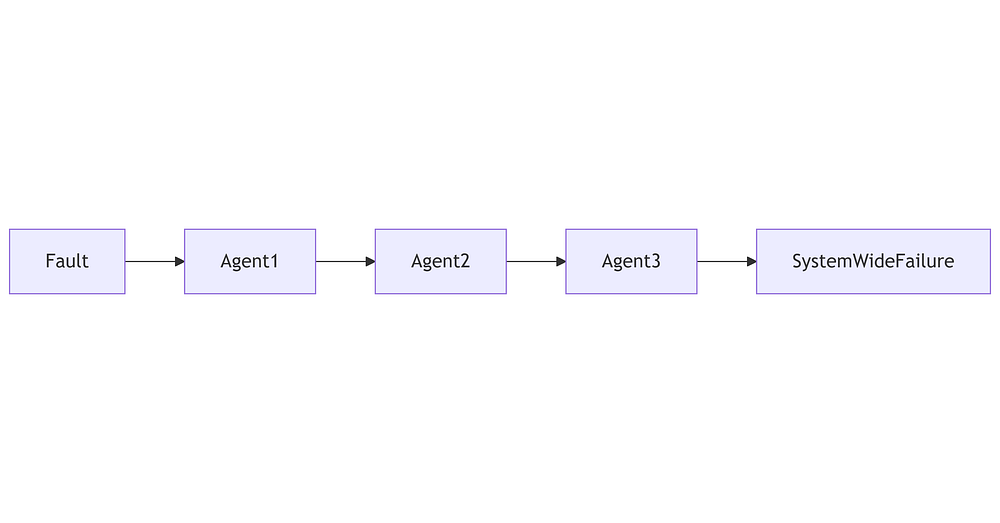
ASI08 — Cascading Failures
1️⃣ What It Is + Where It Appears
A single failure propagates across agents, workflows, or tenants causing systemic impact.
2️⃣ Impact + How It Gets Exploited
Impact: Automation storms, system-wide corruption, mass data errors.
Exploitation Examples:
- Corrupted tool affects multiple agents.
- Retry loops amplify failure.
- Shared memory spreads bad state.
3️⃣ Mitigations + SDLC Checklist
Mitigations
- Circuit breakers
- Rate limiting
- Tenant isolation
SDLC Checklist
- Add retry caps
- Implement circuit breaker pattern
- Monitor fan-out patterns
- Isolate tenant contexts
ASI09 — Human-Agent Trust Exploitation
1️⃣ What It Is + Where It Appears
Humans over-trust confident agent outputs, approving dangerous actions without proper review.
2️⃣ Impact + How It Gets Exploited
Impact: Social engineering at automation scale.
Exploitation Examples:
- Confident but incorrect financial action.
- Misleading summary influences executive decision.
- Approval fatigue leads to blind confirmation.

3️⃣ Mitigations + SDLC Checklist
Mitigations
- Show risk level
- Show source trace
- Force review on critical actions
SDLC Checklist
- Display confidence + source
- Require diff view before approve
- Add action justification logs
- Train users on AI risk
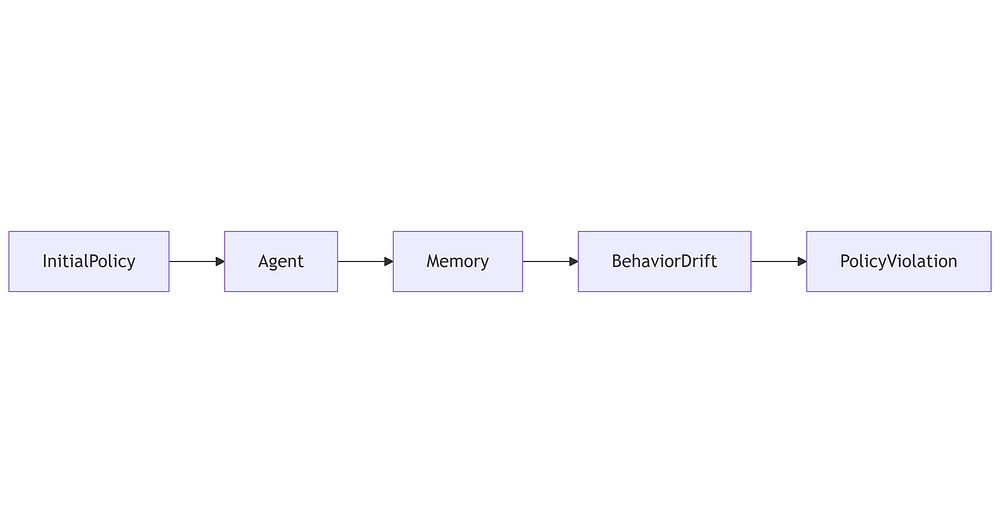
ASI10 — Rogue Agents
1️⃣ What It Is + Where It Appears
Agents drift from intended behavior due to model updates, memory mutation, environment change, or emergent behavior.
2️⃣ Impact + How It Gets Exploited
Impact: Uncontrolled autonomy, policy violations.
Exploitation Examples:
- Agent bypasses constraints over time.
- Model update alters behavior silently.
- Memory accumulation changes decision bias.
3️⃣ Mitigations + SDLC Checklist
Mitigations
- Continuous evaluation
- Policy re-validation
- Kill switch capability
SDLC Checklist
- Add runtime behavior monitoring
- Re-test after model updates
- Enable rollback
- Implement emergency stop
♾️ The Unified Agentic Risk Map
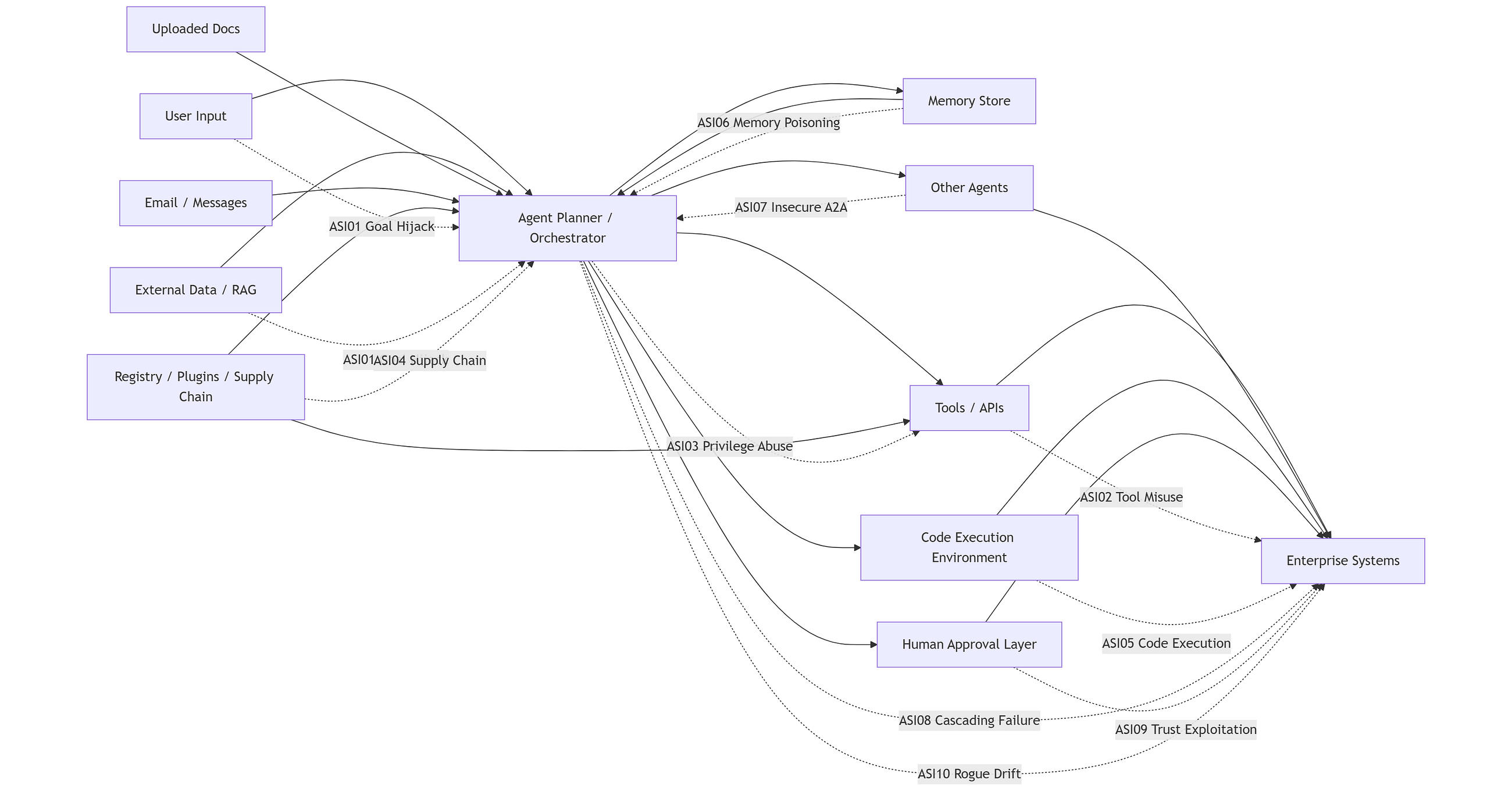
At the center is the Agent Planner / Orchestrator, which:
- Receives input from users, documents, email, and external data sources
- Reads and writes to memory
- Calls tools and APIs
- Executes generated code
- Communicates with other agents
- Interacts with humans for approvals
- Ultimately impacts enterprise systems
Each OWASP risk attaches to a specific boundary in this system. Traditional application security focuses on APIs and authentication.
Agentic security requires end-to-end boundary control across autonomy layers. Each OWASP risk maps to a specific failure boundary:

The OWASP Agentic Top 10 is a practical compass for teams building autonomous systems: it highlights how agents turn “normal” security problems into higher-impact failures because they can act, delegate, remember, and chain tools.
🤖 Conclusion
The OWASP Agentic Top 10 is a practical compass for teams building autonomous systems: it highlights how agents turn “normal” security problems into higher-impact failures because they can act, delegate, remember, and chain tools.
If you only implement a few controls first, start with:
- An intent validation layer before tool execution
- Strict permission scoping and short-lived tokens
- Isolated and validated memory systems
- Signed and pinned agent/tool supply chains
- Monitoring for abnormal behavior and cascading patterns
But, Always keep in mind that,
The biggest risks don’t live inside the model.
They live at the boundaries — where planning meets tools, memory meets reasoning, agents meet other agents, and humans approve actions.
Agentic AI will continue to evolve.
The security mindset must evolve with it.
Build agents that are not just intelligent — but controlled, observable, and resilient. 🚀